Thymelia · A Greek house · Crete & the Peloponnese
A house built on two harvests.
Thymelia is a UK house of Greek single-origin foods: raw thyme honey from the White Mountains of Crete, and early-harvest olive oil from the hills above Kalamata. Two foods, two places, one way of working — buy a whole harvest from one named grower, publish every number, and sell nothing we cannot evidence. The first harvests are still on the hillsides.
- Two named origins
- Never pooled
- Certificate per batch


Part I · The Two DoorsFol. 01
One house, two harvests.
The hive and the grove keep different countries, different seasons and different chemistry — and the same discipline. Each door opens on one of them.
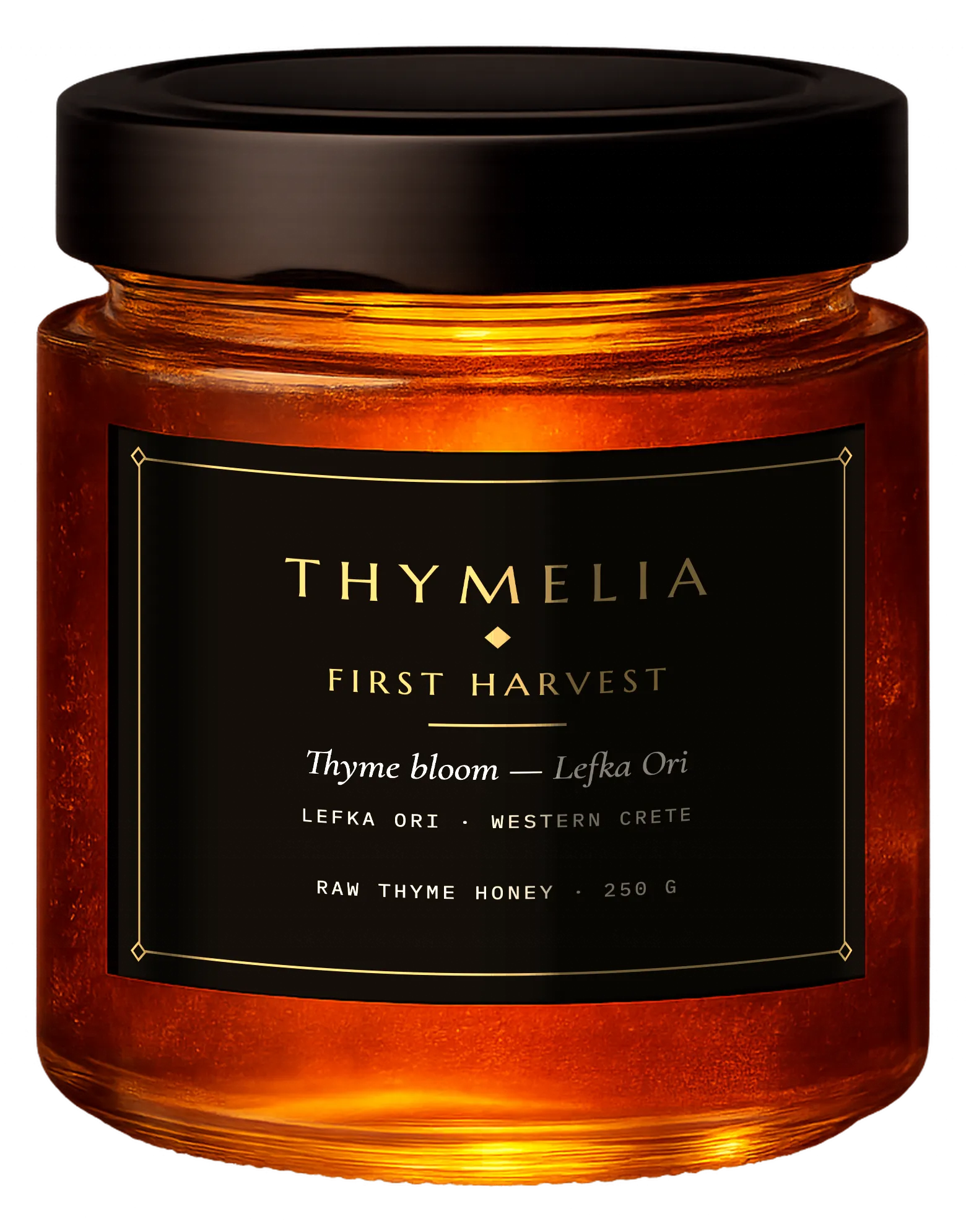
Wild thyme on the limestone shoulders of the Lefka Ori, worked by bees over scrub that has never been farmed. Raw honey drawn once each summer, fresh royal jelly folded cold into it, bee pollen and propolis. Cold-extracted, never pasteurised, bottled unblended.
- The bloom
- May to July
- The draw
- one extraction, as it closes
- The record
- moisture · HMF · diastase
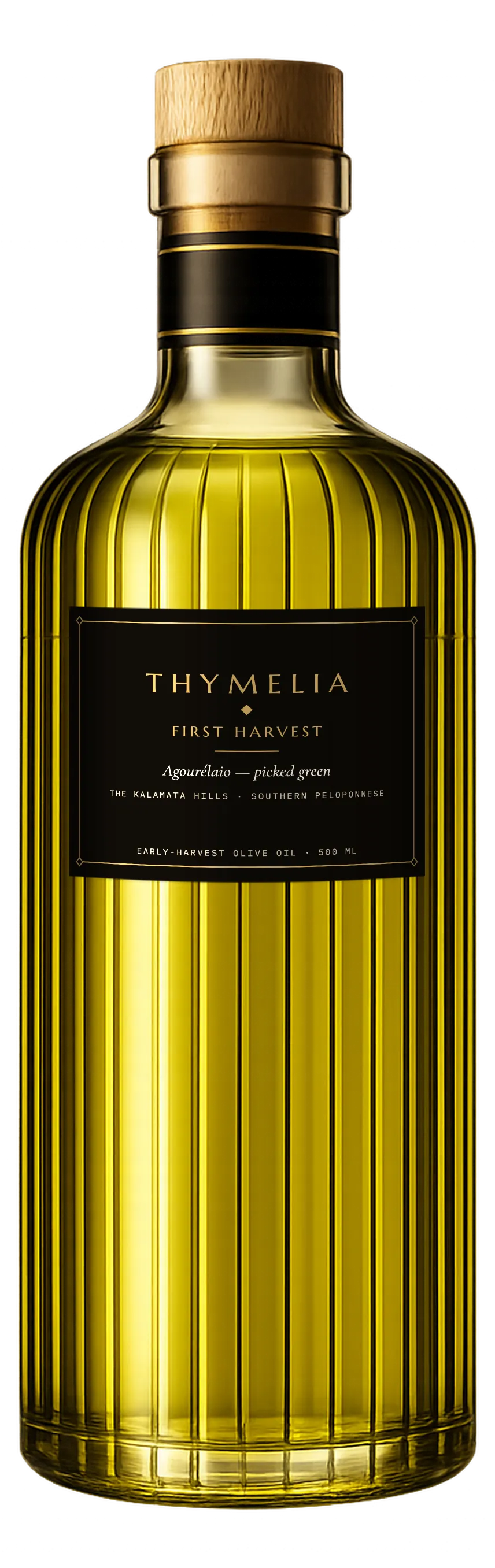
Koroneiki groves in the hill country above Kalamata, under the wall of the Taygetos. Olives picked green from October, carried to the mill the same day and pressed cold — one pressing a season, less oil than the trees could give, on purpose.
- The pick
- green, from October
- The press
- same day, below 27 °C
- The record
- acidity · peroxide · phenols
Looking for the categories rather than the house? The teaching hubs sit beside the doors: raw honey, royal jelly, propolis, bee pollen and olive oil.
Two plants that ask nothing of the ground, and give once a year.
Θυμέλια — from thúmos, the wild thyme, and elaía, the olive. One word for the two harvests this house keeps.
Part II · The Standing RulesFol. 02
Four rules, kept on both sides.
Not a manifesto — how the house actually chooses. Each rule costs us something, which is how we know it is a rule and not a slogan.
One place, named
Every batch comes from one apiary or one grove, and that place is named on the jar or the bottle. No pooled tanks, no blended lots, no “product of more than one country”.
One harvest a season
The thyme flowers once and the olives come off once. What the season gives is what exists — we will never blend two harvests to make more of a good year.
Numbers, not adjectives
A certificate of analysis travels with every batch and is published here in full, against the legal limits. If a quality cannot be measured, we describe it plainly and leave it at that.
Written in-house
The guides, the evidence pages and the recipes are written by the people who walk the groves and taste the harvests — composition, origin and process, with every source named.
Part III · The Reading RoomFol. 03
Everything we know, written down.
Buyer’s guides, the research read study by study, and the Greek cooking these two harvests belong to — written in-house, sourced line by line.
Also open: Greek food, where the table these two harvests belong to gets its history, and the journal, where the house keeps its notes.
Part IV · QuestionsFol. 04
Asked, answered.
What is Thymelia?
A small UK house for Greek foods, working two origins: raw thyme honey and the products of the hive from Chania in western Crete, and early-harvest extra virgin olive oil from the hills above Kalamata in the southern Peloponnese. We will buy whole harvests from named growers, publish a certificate of analysis for every batch, and sell nothing we cannot evidence. The olive grove is contracted and its oil is certified organic; nothing is on sale yet.
What does the name Thymelia mean?
It is built from two Greek words: thúmos, the wild thyme the bees work in Crete, and elaía, the olive — one word for the two harvests this house keeps. Thymelaea, a genus of Mediterranean shrubs in the family Thymelaeaceae, is named from the same two words, for the shape of its leaves and fruit. It is a different thing entirely, and nothing we sell.
Where do the honey and the olive oil come from?
The honey comes from the Chania region of western Crete, where wild thyme grows on the limestone shoulders of the Lefka Ori, the White Mountains. The olive oil comes from the hill country above Kalamata, in the southern Peloponnese — Koroneiki groves under the Taygetos. Each batch will name its own apiary or grove.
Can I buy anything yet?
No. Nothing is on sale, and we are not naming a date. We will not publish one until stock is contracted and tested. The Harvest Letter gets first call on both allocations, and it is the only place the dates will be announced — join it below.
What do you publish about each batch?
The producer’s certificate of analysis, in full, in real units, against the legal limits — never summarised into a tick. For honey that means moisture, HMF, diastase activity and a pollen count; for olive oil, free acidity, peroxide value, UV absorbency, the taste panel’s verdict and a phenolic figure. Every batch is numbered, and when it is gone the number retires.
The Harvest Letter
Two letters a year. Nothing between.
One at the summer extraction, one at the autumn pressing: first call on the first jars and first bottles we fill, and the harvest report in real numbers.
No promotions between letters. Unsubscribe any time — write to care@thymelia.com and the record is deleted. Joining stores your address, the date, and the page you joined from; nothing else. What we keep.